
CORONARY ARTERY DISEASE AND ANGINA
Plaque narrows the heart arteries.
Demand beats supply, and the heart muscle cries out.

FOUNDATIONS + CONNECTIONS
Supply, demand and the three kinds of angina.ANGINA =
Angina pectoris: chest pain or pressure when the heart muscle needs more oxygen than narrowed coronary arteries can deliver.
WHAT HAPPENS ON THE STAIRS
Enough flow at rest. Demand jumps.
 The muscle is starving.
 Demand drops, pain fades.
STABLE, UNSTABLE OR VARIANT? tap each box to reveal
 STABLE |  UNSTABLE |  VARIANT | |
|---|---|---|---|
| WHEN | With exertion, cold, a big meal, stress | New, at rest or worse than usual | At rest, often early morning |
| CAUSE | Fixed narrowing | Plaque ruptures, clot forms | Artery spasm, also called Prinzmetal angina |
| LASTS | A few minutes | Longer, keeps coming back | Minutes, can recur |
| RELIEF | Rest or nitroglycerin | Not reliably relieved | Nitrates, calcium channel blockers |
| URGENCY | ▬Plan care | ▲Treat as a heart attack | ▬Find the trigger |
RISK FACTORS
CAN BE CHANGED hover or tap
CANNOT CHANGE hover or tap
ACROSS THE LIFESPAN tap each one
HOW IT CONNECTS tap each one
CADCHECKPOINT 1ASSESSMENT + DIAGNOSTICS
Describe the pain, read the tests.DESCRIBE THE PAIN tap each one
STABLE OR UNSTABLE?
TESTS flip all 6
BEFORE THE CATH: REPORT IT OR NOT?
CHECKPOINT 2PRIORITIZATION + CLINICAL JUDGMENT
Chest pain on the unit: what first.CHEST PAIN ON THE UNIT put it in order
WHO DO YOU SEE FIRST?
WHO CAN DO WHAT?
CHECKPOINT 3MEDICAL TREATMENT + TEAM
Medicines, stents and bypass.THE PLAN tap each step
STENT OR BYPASS?
BEFORE A CATH hover or tap
THE TEAM hover or tap
CHECKPOINT 4NURSING INTERVENTIONS
Cath site care and the traps.PRIORITY NURSING ACTIONS
ASSESS PAINEvery episode: PQRST.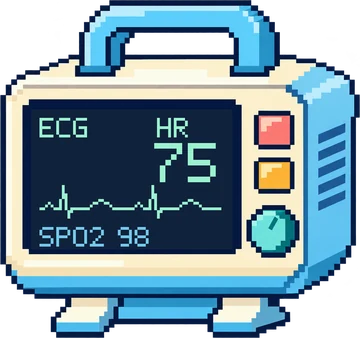 TELEMETRYIschemia triggers dysrhythmias.
 BP BEFORE NITRATESHold for low BP per order.SPACE ACTIVITYRest between tasks.DISTAL PULSESAfter any cath.
 URINE + CREATININEAfter dye.
WRIST OR GROIN?
SHEATH OUT, CLIENT DOWN
DO IT OR TRAP?
 CHECKPOINT 5
PHARMACOLOGY
The nitro rules and the drug traps.THE 5-MINUTE NITRO CLOCK slide the minutes
 Tablet 1Call 911Tablet 2Tablet 3
THE MEDICATION CARDS tap to flip
MATCH THE DRUG TO THE TRAP tap a pair
CHECKPOINT 6COMPLICATIONS + EVALUATION
What can go wrong and how you know it is working.COMPLICATIONS tap each one
AFTER A STENT scroll the timeline
DAY 0Stent placedSite checks, fluids, telemetry.DAY 1HomeNo heavy lifting with that arm for a few days.WEEKS 1 TO 6Cardiac rehabSupervised exercise and teaching. 6 TO 12 MONTHSTwo antiplateletsAspirin plus a second drug, as the cardiologist sets.
 LIFELONGAspirin + statinAnd every risk factor controlled.
IS THE PLAN WORKING?
CHECKPOINT 7PATIENT EDUCATION
Heart-healthy living and when to call.USING NITROGLYCERIN TABLETS
Sit down first1 tablet under the tongueNot better in 5 minutes: call 911Up to 3 tablets, 5 minutes apart Dark glass bottle, carry it always
HOW TO MANAGE IT AT HOME



HEART-HEALTHY OR NOT? beat the clock
OKAY, CALL THE PROVIDER, OR CALL 911?
CHECKPOINT 8FINAL CHECK
5 questions from everything, mixed like the exam.FINAL CHECKPLAY IT
 Q BANK
 ACUITY
 POTION PASS
CORONARY ARTERY DISEASE AND ANGINA, ONE SHEET
Every sprite, rule and medication from this page, made to print or drop into your notes app.
$2.99 · FREE WITH PRO
COMING SOON SEE PRO
QUICK ANSWERS
What is the difference between stable and unstable angina?
Stable angina is predictable chest pain with exertion that goes away with rest or nitroglycerin. Unstable angina is new, happens at rest or is getting worse. It is an acute coronary syndrome and is treated like a heart attack.
How should a client take sublingual nitroglycerin?
Sit down, place 1 tablet under the tongue and let it dissolve. If the pain is not better or is worse 5 minutes after the first tablet, call 911. Up to 3 tablets can be taken 5 minutes apart.
Which drugs should never be taken with nitrates?
Erectile dysfunction drugs such as sildenafil and tadalafil. Together with nitrates they can cause a severe, dangerous drop in blood pressure.
Is a shellfish allergy a reason to avoid contrast dye?
No. A shellfish allergy does not predict a reaction to contrast dye. A past reaction to the dye itself should be reported before the procedure.
What should the nurse check after a cardiac catheterization through the wrist?
The color, warmth, pulse and feeling of the hand, the site for bleeding, and that the compression band is released slowly per protocol. No blood pressures or blood draws on that arm.
How this page is checked: facts come from current national clinical guidelines and standard nursing textbooks and review books, weighted to what they test most. All wording, questions and art are original to PixelNursing. Last reviewed November 2026.